


Gallery Walls: How to Curate and Frame Art Like a Pro
Curating a gallery wall at home can transform any blank wall into a personalized, artistic statement, adding depth, texture, and personality to your space. Here are 8 practical tips to guide you through the process, whether you’re a seasoned decorator or a beginner.
- Find Your Inspiration
Start by gathering ideas for your gallery wall style. Platforms like Pinterest, Instagram, or even art galleries can be fantastic sources of inspiration. Determine the mood or theme you want: Do you prefer a clean, minimalist aesthetic with monochrome frames, or a vibrant, eclectic mix with colorful artwork? Knowing your style will help you decide on the types of picture frames, colors, and layout you’d like to use.
- Choose a Focal Point
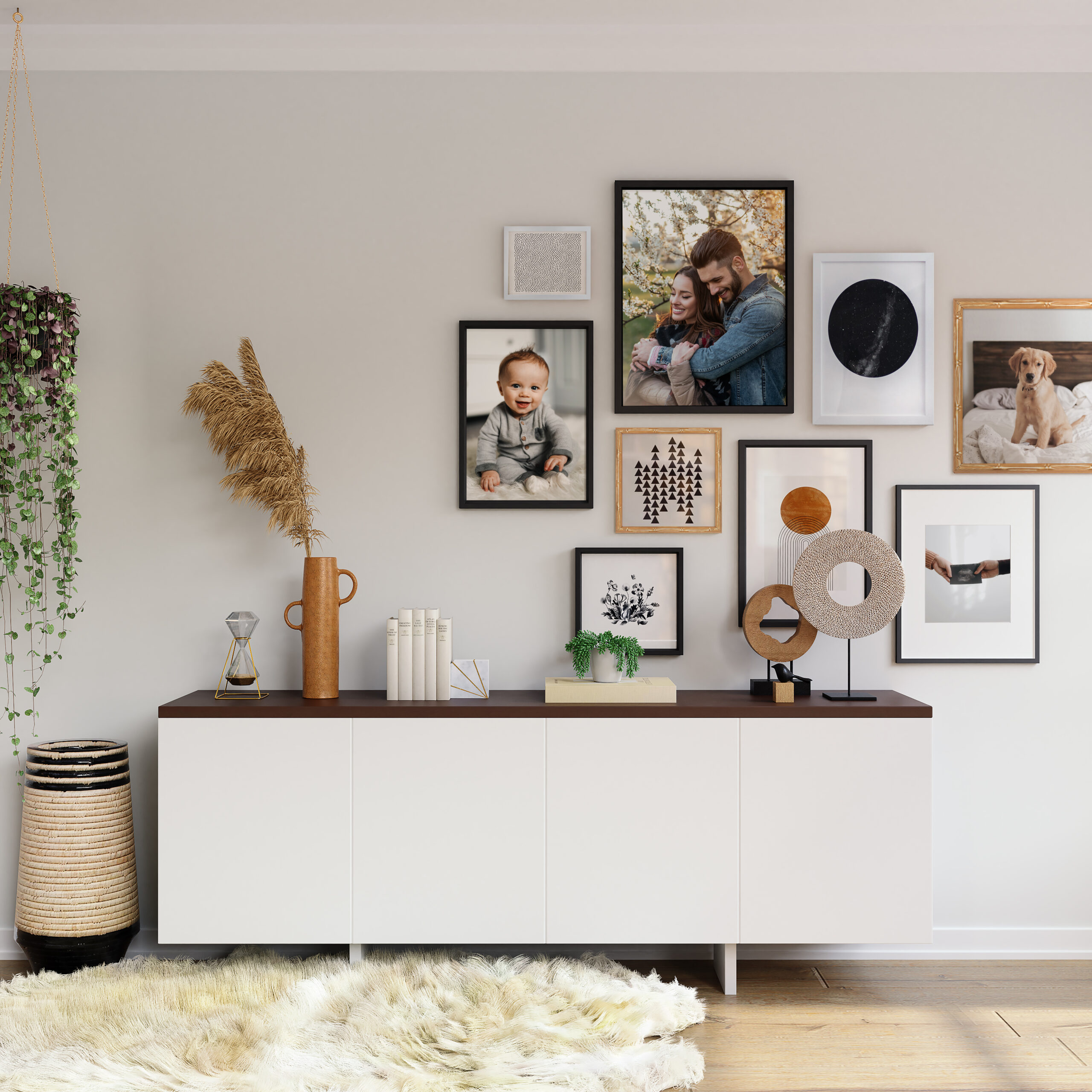
Deciding on a focal point can help structure your gallery wall. This could be a larger piece of art, a cherished family photo, or even a decorative mirror that serves as the anchor of your arrangement. A focal point provides a visual anchor, grounding the display and allowing other pieces to build around it. The focal piece doesn’t necessarily need to be centered, but it should be the one that draws the eye first.
- Select a Cohesive Color Scheme
A cohesive color scheme is essential for a gallery wall that feels unified. If your home leans towards neutral tones, a mix of black, white, and metallic frames may complement the space well. For a bolder look, integrate a variety of colors that either match or contrast in an intentional way. You can choose to keep the artwork itself within a color palette, or make the frames and mats the unifying elements. Using a few repeat colors will tie everything together visually.
- Play with Different Frame Sizes and Styles
A well-designed gallery wall often incorporates various frame sizes and shapes to keep the display dynamic. For a classic look, stick to frames that are the same color but vary in size; for a more eclectic wall, mix up the frame styles—like vintage wood, modern metal, or colorful painted frames. Don’t be afraid to experiment with thicknesses and textures, as different styles add depth to the arrangement.
- Lay Out Your Design on the Floor First
Once you have your frames and artwork, it’s time to test your layout. A tried-and-true technique is to arrange the artwork on the floor. This gives you the freedom to try different compositions without hammering any nails. Start with your focal piece and work outward, keeping consistent gaps (around 2–3 inches) between frames. Alternatively, you could cut out paper templates of your frames and tape them to the wall to envision the layout.
- Mix Up Your Artwork
To add variety and interest, consider mixing different types of artwork. Include a balance of photography, illustrations, abstract art, and even personal mementos. This combination will add depth and keep the wall visually intriguing.
- Start Hanging from the Center or the Bottom
When it’s time to put up the frames, it helps to start from either the center or the bottom. If you start from the center, it gives a balanced foundation to work outward, whereas starting from the bottom can help ensure the pieces align well along the bottom line, especially if you’re creating a grid.
- Use Picture Hanging Tools for Precision
Precision is key for an organized gallery wall. Tools like a measuring tape, level, and laser level can ensure your frames are aligned perfectly.
With these tips, your gallery wall will be a reflection of your personality and taste—a unique display that brings character to your home. Remember, the most important part of a gallery wall is to make it meaningful to you. Enjoy the process and feel free to refresh it over time!